


Common Propertyware Accounting Mistakes Property Managers Must Avoid

Property management accounting is not just about collecting rent and paying bills. It is about maintaining accurate financial records, protecting owner funds, and ensuring every transaction is recorded properly. Propertyware helps property managers organize their financial data, but even the best software cannot prevent human errors. Small bookkeeping mistakes can quietly grow into bigger financial problems if they go unnoticed.

Many property managers rely on Propertyware to track rent payments, expenses, and owner distributions. When entries are inaccurate or reconciliations are incomplete, reports may show misleading financial results. These Propertyware accounting errors can affect decisions, confuse owners, and disrupt operations.
Understanding the most common Propertyware bookkeeping mistakes helps property managers stay ahead of problems. With the right processes and attention to detail, managers can maintain accurate financial records and avoid costly surprises. Let’s explore the accounting pitfalls property managers often encounter and how to prevent them.
Why Propertyware Accounting Errors Can Create Serious Financial Problems for Property Managers
Accurate accounting is the backbone of a successful property management business. When financial data is wrong, everything built on that information becomes unreliable. Property managers depend on accurate numbers to distribute owner funds, plan maintenance budgets, and track property performance.
Propertyware accounting errors can disrupt this process. A single misclassified expense or missing transaction can distort financial reports. Property owners rely on clear statements to understand how their properties perform, and errors in those reports can damage trust quickly.
Another risk comes from compliance. Many states require strict accounting standards for property managers who hold funds on behalf of owners and tenants. If financial records are inaccurate, managers may struggle to meet regulatory requirements or pass audits.
These risks make accuracy essential. Property managers who follow proven Propertyware accounting best practices are far less likely to experience reporting problems. Reliable bookkeeping ensures every transaction tells the correct story about the health of the property portfolio.
Strong financial management also allows managers to focus on growth. When books are accurate and reconciled, property managers can confidently make decisions that improve performance and strengthen owner relationships.
A solid accounting foundation also supports efficient workflows. Clean records reduce time spent fixing mistakes and increase time spent managing properties effectively.

What Are the Most Common Propertyware Bookkeeping Mistakes Property Managers Make?
Property managers handle many financial tasks every day. With multiple properties, vendors, and tenants involved, it is easy for bookkeeping mistakes to slip into the system. Many Propertyware bookkeeping mistakes come from simple oversights rather than complex accounting issues.
The following are some of the most frequent problems property managers encounter when managing finances in Propertyware.
Duplicate Transaction Entries
Entering the same transaction twice can inflate expenses or income. This mistake often occurs when manual entries overlap with imported bank data.
Duplicate entries create confusion in financial reports. They also complicate reconciliations and make it difficult to understand actual property performance.
Missing Expense Records
Sometimes an invoice or vendor payment is not recorded. When this happens, expense reports show inaccurate numbers.
Missing records can lead to incorrect owner distributions. Over time, small gaps in accounting can create larger financial discrepancies.
Incorrect Vendor Coding
Vendor payments must be assigned to the correct expense categories. Misclassification makes reports misleading and hides true operating costs.
When property managers review financial statements, incorrect coding can create a distorted view of property profitability.
Unrecorded Owner Draws
Owner draws must be recorded properly to reflect accurate balances. Failing to document them can create confusion in financial reports.
Property managers may struggle to reconcile accounts if owner distributions are not tracked correctly.
Inconsistent Data Entry
Different team members may enter transactions in different ways. Inconsistent naming conventions and coding make reporting more complicated.
Standardized bookkeeping processes help maintain clarity and prevent these common Propertyware accounting errors. These mistakes may appear small at first glance. Over time they can accumulate and affect financial accuracy across the entire property portfolio. Recognizing these risks early helps property managers create better processes and maintain reliable accounting records.
How Misclassified Transactions in Propertyware Distort Financial Reports
Transaction classification plays a major role in property management accounting. Every payment, fee, and expense must be recorded in the correct category to ensure accurate financial reporting. When transactions are misclassified, the numbers in financial statements tell the wrong story.
For example, a maintenance expense recorded as a capital improvement changes how a property’s profitability appears. Reports may show higher operating income than the property actually generates. Property owners reviewing those statements may make decisions based on incorrect assumptions.
Misclassification also affects budgeting and forecasting. Property managers rely on historical expense data to estimate future costs. When expenses are coded incorrectly, maintenance budgets may be too low or too high. Either scenario creates operational challenges.
Another issue involves tax reporting. Property owners depend on accurate expense categorization when preparing financial documents for tax purposes. Misclassified transactions can complicate reporting and increase the risk of errors.
Following Propertyware accounting best practices reduces the likelihood of these mistakes. Clear chart of accounts structures and consistent coding policies help ensure transactions land in the right place. Regular reviews of financial statements can also highlight unusual patterns that signal classification errors.
Accurate categorization builds confidence in financial reports. When reports reflect true property performance, property managers can make informed decisions that support long term growth.

Why Incomplete Bank Reconciliation Leads to Hidden Propertyware Accounting Errors
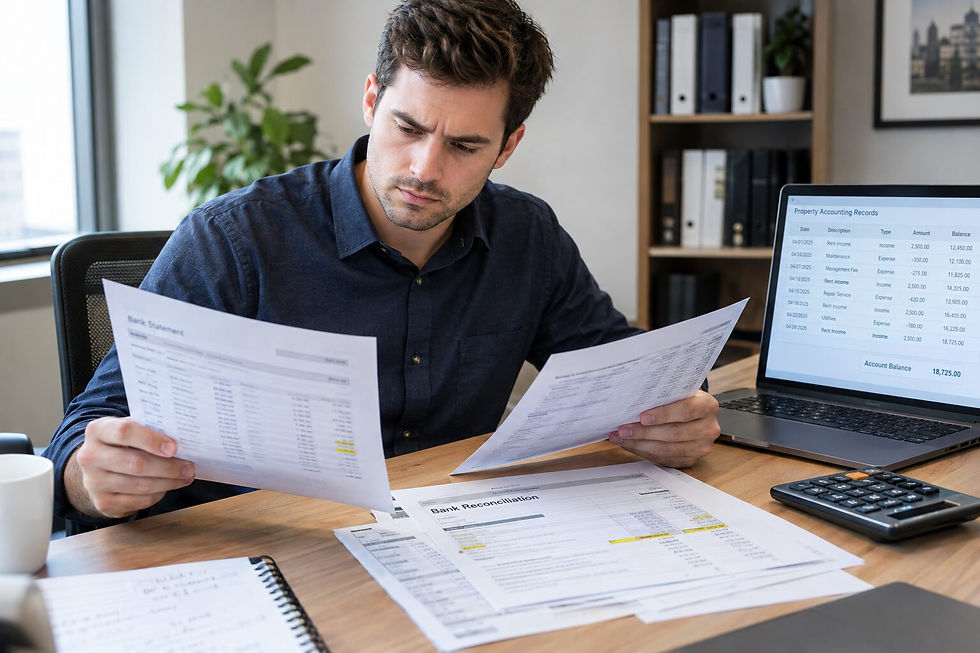
Bank reconciliation is one of the most important tasks in property management accounting. It confirms that the transactions recorded in Propertyware match the transactions recorded by the bank. Without reconciliation, financial reports may contain hidden errors.
Property managers should compare bank statements and system records regularly. This process reveals missing transactions, duplicate entries, and incorrect balances. Without reconciliation, these issues can remain unnoticed for months.
Incomplete reconciliation often leads to inaccurate trust account balances. Property managers must ensure that tenant funds, owner funds, and operating accounts are properly recorded. Any discrepancies between bank records and system data can create compliance risks.
Reconciliation also supports transparency. Property owners expect accurate financial reporting that reflects every transaction. Regular bank reconciliation ensures that the numbers in owner statements align with actual cash flow.
Many Propertyware accounting errors originate from skipped reconciliation steps. Busy property managers may postpone the process, thinking they will catch up later. Unfortunately, delayed reconciliation makes it harder to identify the source of discrepancies.
Consistent reconciliation practices keep accounting records accurate and reliable. Property managers who reconcile accounts regularly maintain cleaner books and avoid financial surprises.
Strong reconciliation habits also strengthen financial control. Managers gain a clearer picture of cash flow and ensure that every dollar is accounted for properly.
How Property Managers Can Prevent Propertyware Bookkeeping Mistakes With Better Processes
Preventing accounting errors requires structured processes. Property managers who implement consistent financial workflows experience fewer bookkeeping problems and more reliable reporting.
Establish Standardized Coding Rules
Create clear rules for categorizing income and expenses. Consistent coding helps financial reports remain accurate across all properties. Standardized categories also make it easier to analyze expenses and compare property performance.
Schedule Monthly Reconciliation Reviews
Monthly reconciliation ensures that bank records match system entries. This practice catches discrepancies before they grow into larger issues. Regular reviews maintain accurate trust account balances and protect financial integrity.
Train Staff on Propertyware Accounting Procedures
Team members responsible for bookkeeping should understand proper data entry procedures. Training ensures everyone follows the same accounting guidelines. Consistent training reduces errors caused by misunderstandings or inconsistent workflows.
Monitor Financial Reports Regularly
Reviewing reports frequently helps property managers detect unusual transactions. Early detection prevents minor issues from becoming larger accounting problems. Regular monitoring also improves financial transparency for property owners.
Document Accounting Policies
Written accounting policies guide team members through financial processes. Clear documentation prevents confusion and supports consistent bookkeeping. Well documented procedures also make onboarding new staff much easier.
Leverage Automation Features
Propertyware offers automation tools that streamline financial tasks. Automated imports and reminders reduce manual data entry. Using built in automation features helps property managers minimize human error and maintain accurate financial records.
These preventive strategies build a reliable accounting environment. Property managers who establish clear processes experience fewer bookkeeping headaches and stronger financial control.
Why Many Property Managers Rely on Professional Propertyware Accounting Support
Even experienced property managers can struggle to maintain perfect financial records. Managing multiple properties requires constant attention to accounting details, reconciliations, and reporting. Professional accounting support helps ensure these tasks remain accurate and consistent.
WPM Accounting specializes in accounting services for property managers. Our team understands the complexities of Propertyware and helps managers maintain clean financial records. By reviewing reports, reconciling accounts, and correcting errors, professionals help property managers avoid costly mistakes.
Professional support also ensures compliance with financial standards and best practices. Property managers who rely on propertyware property management accounting services gain confidence in their financial reports. Accurate records allow them to focus on growing their portfolio rather than fixing accounting problems.
Working with experienced professionals also improves efficiency. Instead of spending hours troubleshooting accounting issues, property managers can dedicate more time to leasing, maintenance, and client relationships.
Reliable accounting support builds trust with property owners. When financial reports are accurate and transparent, owners feel confident in the management of their investments.
Conclusion
Accurate accounting is essential for every property management business. Propertyware offers powerful tools to manage financial data, but the system works best when supported by strong bookkeeping practices. Propertyware accounting errors and Propertyware bookkeeping mistakes often arise from inconsistent processes, misclassified transactions, or incomplete reconciliations.
Property managers who focus on proper financial workflows reduce these risks significantly. Clear coding rules, consistent reconciliation, and regular financial reviews keep accounting records accurate and reliable.
Professional accounting support provides an additional layer of confidence. With expert guidance from WPM Accounting and reliable propertyware property management accounting services, property managers can maintain organized financial records, avoid costly mistakes, and focus on growing their property portfolio.

Frequently Asked Questions About Propertyware Accounting Errors and Bookkeeping Mistakes
What are the most common Propertyware accounting errors property managers experience?
Common errors include duplicate transactions, missing expense entries, incorrect account coding, and incomplete reconciliations. These issues can distort financial reports and create confusion for property owners. Regular reviews and reconciliation help identify and correct these errors early.
How can property managers identify bookkeeping mistakes in Propertyware reports?
Property managers should review financial reports regularly and compare them with bank statements. Unusual balances or inconsistent expense patterns may indicate bookkeeping mistakes. Monthly reconciliation also helps reveal discrepancies quickly.
Why is bank reconciliation important for avoiding Propertyware accounting errors?
Bank reconciliation ensures that every transaction recorded in Propertyware matches the bank statement. This process helps detect missing transactions, duplicate entries, and incorrect balances. Consistent reconciliation keeps financial records accurate and trustworthy.
Can Propertyware automation reduce bookkeeping mistakes for property managers?
Yes, automation features in Propertyware can simplify data entry and transaction tracking. Automated imports and reminders reduce the risk of manual errors. Using these tools helps property managers maintain organized financial records.
How can professional accounting services help property managers using Propertyware?
Professional accounting services review financial records, reconcile accounts, and ensure reports remain accurate. Experts also help implement Propertyware accounting best practices that reduce mistakes. Partnering with professionals like WPM Accounting allows property managers to maintain reliable financial systems and focus on growing their business.


Comments