


Property Management Expense Allocation: Avoid Costly Reporting Errors

Managing expenses across multiple properties can become complicated faster than many property managers expect. A single vendor may provide services to several properties, while insurance, utilities, maintenance, payroll, and administrative costs may need to be divided across different properties or ownership groups. When those expenses are assigned incorrectly, the problem is not limited to bookkeeping. It can affect property profitability, owner statements, cash flow visibility, and the accuracy of financial reports.
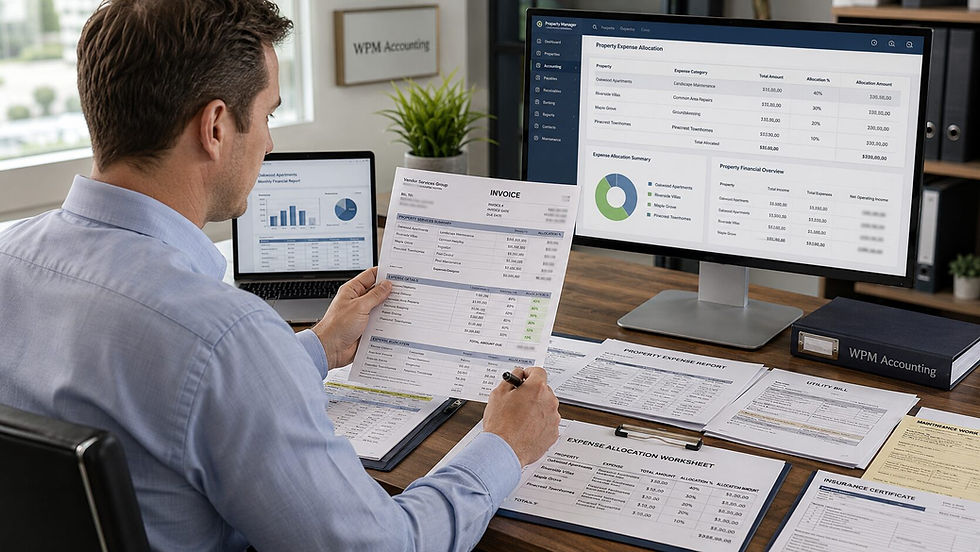
Property management expense allocation requires more judgment than simply recording a payment. Property managers and accounting teams need to determine which property benefited from the expense, how much each property should absorb, and which accounting period should recognize the cost. A mistake in any of these areas can cause one property to appear less profitable while another appears stronger than it really is.
The challenge becomes even greater as a portfolio grows. Without consistent allocation rules and regular reviews, expenses can be assigned based on assumptions, copied from previous transactions, or posted to the wrong property altogether. Over time, these small errors can create reconciliation issues, incorrect owner statements, and financial reports that do not accurately represent the performance of each property.
Why Property Management Expense Allocation Matters for Accurate Financial Reporting
Property management expense allocation helps ensure that costs are reflected where they actually belong. This is particularly important when a management company oversees multiple properties that share vendors, employees, services, or operating resources.
Consider a landscaping company that maintains five rental properties under the same management company. The vendor sends one invoice covering all five locations. If the entire invoice is assigned to one property instead of being allocated based on the services provided at each location, that property's expenses will be overstated while the other four properties will appear more profitable than they actually are.
The same issue can occur with insurance premiums, software subscriptions, maintenance contracts, utilities, and administrative expenses. The correct allocation method depends on the nature of the cost and the benefit each property receives.
Accurate allocation also affects owner reporting. Property owners expect their statements to reflect the income and expenses associated with their investments. If shared expenses are allocated incorrectly, an owner may question unusual expense increases or believe that a property is performing better or worse than it actually is.
This is why expense allocation should be treated as part of the financial reporting process rather than as a simple bookkeeping task. When expenses are consistently assigned to the correct properties, property managers have a clearer view of profitability and owners receive more reliable information.

How Does Property Management Expense Allocation Work Across Multiple Properties?
The process begins by identifying the expense and determining which property or properties benefited from it. The accounting team then selects an appropriate allocation method based on the underlying cost rather than simply dividing the expense evenly in every situation.
For example, a vendor invoice for $5,000 may cover maintenance work at three properties. If Property A received $2,500 in services, Property B received $1,500, and Property C received $1,000, the expense should be recorded according to the actual services provided rather than divided into equal portions.
Some expenses require a different approach. An insurance premium covering several properties might be allocated based on the insured value of each property. A shared software subscription might be divided based on the number of units managed, while an administrative cost could be allocated using a documented percentage based on portfolio size or another reasonable business measure.
The key is consistency. Property managers should establish clear allocation rules for recurring shared expenses and document how those rules are determined. This creates a repeatable process that accounting teams can follow and review.
Accurate allocation also depends on good transaction records. Property management accounts payable processes should capture enough information to identify the property, vendor, service period, and nature of each expense. When invoices are missing property details, accounting teams may need to investigate before recording the transaction.
The process should also account for timing. A prepaid insurance policy, for example, may benefit multiple properties over several months. In that situation, the allocation process may need to work alongside property management prepaid expenses procedures so that each property recognizes its appropriate share over the correct reporting periods.
When allocation rules are clear and supported by documentation, the accounting process becomes easier to review and financial reports become more consistent.
Which Property Management Expense Allocation Mistakes Can Distort Property Reports?
Expense allocation mistakes are often caused by rushed processing, unclear procedures, incomplete invoices, or a lack of review. The following problems can have a direct impact on property level reporting.
Assigning a Shared Vendor Invoice to One Property
A single invoice covering multiple properties may be posted entirely to the property listed first on the document or to the property associated with the vendor record. This overstates one property's expenses and understates the expenses of the other properties that received the services.
Dividing Every Shared Expense Equally
Some accounting teams divide shared costs evenly because it appears simple and efficient, even when the properties benefit from the expense differently. This can produce inaccurate property profitability figures and make financial reports difficult for owners to interpret.
Using Outdated Allocation Percentages
Allocation percentages may remain unchanged even after a property's unit count, service usage, or portfolio structure changes. The resulting expense distribution may no longer reflect how costs are actually being incurred.
Allocating Expenses to the Wrong Ownership Group
An expense can sometimes be assigned to the wrong property owner when several ownership entities have similar properties or vendor relationships. This may lead to incorrect owner statements and require additional adjustments before distributions or reporting can be finalized.
Failing to Review Allocations During Reconciliation
Allocation errors can remain hidden when accounting teams reconcile only the total account balance without reviewing individual property activity. A bank account may reconcile correctly while expenses are still assigned incorrectly across the portfolio.
Misallocating Trust Related Expenses
Expenses connected to properties and owner funds require careful handling to avoid confusing operating transactions with trust activity. Incorrect allocation or funding can contribute to trust account mismatches and create additional reconciliation and compliance concerns.
These mistakes often occur because the allocation decision is made quickly during invoice processing without considering the broader reporting impact. A consistent review process can help identify unusual allocations before they appear in owner statements or month end financial reports.

What Are the Top Benefits of Accurate Property Management Expense Allocation?
Accurate allocation does more than improve bookkeeping. It gives property managers and owners a clearer understanding of where money is being spent and how each property is performing.
More Reliable Property Profitability Reports
When expenses are assigned correctly, each property reflects the costs associated with operating it. This gives managers a more realistic view of profitability and helps identify properties with unusual spending patterns.
More Accurate Owner Statements
Owners rely on financial statements to understand investment performance. Proper expense allocation helps ensure that owners are charged for expenses that actually relate to their properties, reducing confusion and unnecessary questions about unexpected costs.
Better Budgeting and Forecasting
Historical expense data is more useful when costs have been consistently allocated. Property managers can use accurate records to develop better budgets and identify expected changes in maintenance, insurance, utilities, and other operating costs.
Faster Reconciliation and Month End Reviews
Consistent allocation reduces the number of corrections required during month end. Accounting teams can spend less time investigating unexplained property balances and more time reviewing meaningful financial activity.
Stronger Financial Decision Making
Reliable expense information allows property managers to identify cost increases, compare property performance, and make more informed recommendations to owners. Decisions become easier when the underlying numbers accurately reflect each property's financial activity.
These benefits are especially valuable as a portfolio grows. The more properties a company manages, the more difficult it becomes to correct allocation errors manually after they have already affected financial reports.
How Can Property Managers Improve Expense Allocation Accuracy and Avoid Headaches?
Improving expense allocation starts with establishing clear rules before problems occur. Property managers should not rely on memory or individual judgment for every shared expense, particularly when multiple people are involved in the accounting process.
A practical first step is to document how recurring shared expenses should be allocated. For example, insurance might be allocated according to property coverage, while a shared software subscription could be based on unit count. The specific method should be reasonable, consistent, and supported by documentation.
Property managers should also review invoices before they reach the payment stage. This is where property management accounts payable procedures become closely connected to expense allocation. An invoice should be checked for the correct property, vendor, service period, and expense category before payment is approved.
Regular reconciliation is another important control. Reviewing property level expenses against vendor invoices, bank activity, and supporting documentation can reveal transactions that were assigned incorrectly. Reconciliation should not only confirm that the total cash activity is correct but also verify that the expenses were recorded in the correct property accounts.
Technology can also help. Accounting systems can provide property level reporting and recurring transaction workflows, but automation should not replace professional judgment. If a contract changes, a property is sold, or the number of units in a portfolio changes, allocation rules may need to be updated.
Finally, property managers should review allocation methods periodically. A method that worked when managing ten properties may not remain appropriate when the portfolio grows to fifty or one hundred properties.
A disciplined process may take more effort upfront, but it can prevent much larger headaches later when owner statements need to be corrected or financial reports need to be reissued.
When Should Property Managers Consider Outsourcing Expense Allocation and Accounting?
Managing expense allocation internally can become increasingly difficult as a property portfolio expands. Property managers may find themselves spending more time reviewing invoices, investigating unusual expenses, correcting owner statements, and reconciling property balances instead of focusing on daily operations and client relationships.
Outsourcing may be worth considering when allocation errors are becoming frequent, month end reporting is consistently delayed, or internal staff do not have enough time to review transactions properly. It can also be helpful when a management company begins handling more complex expenses that involve multiple properties or ownership structures.
Professional Accounting services for property manager can provide additional oversight for expense coding, allocation, reconciliation, and financial reporting. An experienced accounting team can help establish consistent procedures and review transactions before errors reach owner statements.
WPM Accounting can also support property managers who need a more structured approach to their accounting workflows. Professional accounting support can help reduce the burden of managing complex property level transactions while giving management teams greater confidence in the accuracy of their financial information.
The goal of outsourcing is not simply to move accounting tasks to another team. It is to create a stronger process where expenses are reviewed, allocated, reconciled, and reported consistently. For growing property management companies, that additional structure can make a meaningful difference in reporting accuracy and operational efficiency.
Conclusion
Property management expense allocation is one of those accounting processes where small decisions can have a significant impact. An incorrectly allocated vendor invoice may seem minor at the time, but repeated errors can distort property profitability, create inaccurate owner statements, complicate reconciliations, and make financial reports less reliable.
The solution is not necessarily a more complicated accounting system. It is a consistent process supported by clear allocation rules, accurate documentation, regular reconciliation, and professional review. Property managers should also recognize that allocation methods need to evolve as portfolios grow and operating structures change.
The most practical steps to take are:
Establish documented allocation rules for recurring shared expenses.
Review vendor invoices before payment to confirm the correct property and expense category.
Use reasonable allocation methods based on the actual benefit received by each property.
Reconcile property level transactions rather than reviewing only total account balances.
Review allocation percentages regularly as properties, unit counts, and contracts change.
Coordinate expense allocation with accounts payable and prepaid expense processes.
Consider professional accounting support when portfolio growth makes accurate allocation difficult to manage internally.
Accurate expense allocation gives property managers better information and gives owners greater confidence in the reports they receive. When the process becomes too complex to manage consistently, working with an experienced accounting team can help protect reporting accuracy while allowing property managers to focus on running and growing their portfolios.

Frequently Asked Questions About Property Management Expense Allocation
What is property management expense allocation?
Property management expense allocation is the process of assigning costs to the correct property, ownership group, or accounting category based on who benefited from the expense. It helps ensure that property financial reports and owner statements accurately reflect the costs associated with each property.
How should property managers allocate shared expenses between properties?
Shared expenses should be allocated using a reasonable method that reflects how each property benefits from the cost. Depending on the expense, this may be based on actual usage, unit count, property value, coverage amounts, or another documented allocation method.
What are the most common property management expense allocation mistakes?
Common mistakes include assigning shared invoices to one property, dividing expenses equally when the benefits differ, using outdated allocation percentages, and posting costs to the wrong ownership group. These errors can distort property profitability and create inaccurate financial reports.
How can incorrect expense allocation affect owner statements and property profitability?
Incorrect allocation can cause one property to appear more profitable while another appears to have higher expenses than it actually incurred. This can lead to inaccurate owner statements, questions about financial activity, and decisions based on misleading property performance data.
Can outsourced accounting services help property managers with expense allocation?
Yes. Outsourced accounting professionals can help establish allocation procedures, review invoices, reconcile property level transactions, and ensure expenses are recorded consistently. This can be particularly valuable for property managers overseeing growing portfolios with complex shared expenses.


Comments